No.128 November.28, 2016 |
| |
Subscribe |
 |
|
|
| |
Contact us |
|
| |
7Th/8Th/11th Floor,Scitech Place, 22 Jianguo Menwai Ave.,Beijing 100004,P.R.China
T: +8610 59208888
F: +8610 85110966 85110968
Web: www.unitalen.com
E-mail: mail@unitalen.com |
|
| |
|
|
| |
|
|
| |
|
|
|
|
| Jinggang Mountains in Jiangxi
|
|
|
| |
|
| |
|
|
| |
| Unitalen News |
|
| |
| |
In this issue
|
 |
|
|
 China Leads Global IP Applications Filing China Leads Global IP Applications Filing |
|
| |
| |
According to the 2016 World Intellectual Property Index reported by WIPO on November 23 in Geneva, there had been around 2.9 million patent applications received from all over the world in 2015, up 7.8% from 2014; China was the biggest contributor with over 1 million patent applications in a span of one year for the first time. (Source: CRI.cn)
|
|
|
| |
| |
|
| The 2nd ID5 Forum held in Beijing |
|
| |
| |
On November 1, 2016, EU Intellectual Property Office (EUPO), Japan Patent Office (JPO), Korea Intellectual Property Office (KIPO), the State Intellectual Property Office of P.R.China (SIPO), and US Patent & Trademark Office (USPTO) met in Beijing for 2016 ID5 Forum (the industrial design framework comprised of the 5 IP offices mentioned above). Obsderver from the World Intellectural Property Office (WIPO) also attended the event at invitation. The forum rreiterated the goals set forth in the first forum, which took place in 2015, and continued to push the establishment of an efficient industrial design protection system that can be adopted among all member states.
The 5 offices decided to cooperate in various aspects of industrial design, such as examination practice study, automated supporting system, industrial design classification, quality improvement, statistics and etc., and to work together to explore the possible solutions in respnose to emerging technologies and new issues related to industrial designs. To provide openness and transparency, the 5 offices decided to launch an ID5 coopeation website (www.id-five.org) as a platform to share the information and projects’ progress with the public.
|
|
|
| |
| |
|
|
|
| Cases in Spotlight
|
|
| |
| Unitalen Helped MACO Win the Highest Trademark Infringement Indemnity |
|
| |
|
Maco Group (Maco)is the owner of Chinese registered trademark“墙锢” (QIANGGU) in respect of “industrial adhesives and glues”, which enjoys a high market recognition among the relevant public after years of commercial advertisement and use by Maco. Beijing Xiujie Xinxing Building Materials Co., Ltd. (the Defendant) used the wordings of “秀洁墙锢”(XIUJIE QIANGGU)、“易康墙锢”(YIKANG QIANGGU)、“兴潮墙锢” (XINGCHAO QIANGGU) on identical products. Maco filed a lawsuit at Beijing IP Court, requesting that the Defendant stop infringement activities, remove negative influences, and pay for the economic losses caused plus the reasonable costs for an amount of 10 million RMB yuan.
The Defendant tried to argue that QIANGGU had become a generic name and that the alleged infringement activity was fair use. However, the court held that the level of recognition of QIANGGU among the relevant public cannot prove it has become a generic name for concrete interface treatment agent products. Moreover, the Court noticed that the Defendant used QIANGGU in bigger size and placed it in a prominent position of the pacakging bucket, which obviously constituted trademark use. Therefore, the Defendant is found infringing on Maco’s trademark right.
With regard to the amount of indemnity, Maco claimed to determine the figure based on the profit acquired by the Defendant through infringement activities, and provided evidence collected through public information channels at their best, which includes the Defendant’s scale of operations, unit sales profit of infringing goods, production volume, sales period, number and geographical coverage of Defendant’s retail stores. With regards to sales profit, Maco requested to take account of the unit price difference and the gross margin of the infrining products. As for the sales volume, although there is no exact number, Maco claimed the monthly production of the Defendant’s “XIUJIE QIANGGU” products alone were at 10,000 tons, and the Defendant had separate sales departments for “XIUJIE” and “YIKANG” series, based on which, in combination with other factors such as Denfendant’s scale of operation, the number of retail stores and geographical coverage, it is reasonable to deduce that the three infringing products should have a total of monthly sales volume over 10,000 tons. The Defendant challenged the objectivity of the above evidence, but refused to provide the bookkeeping records and information of the relevant business activities even after the court explained to them the corresponding legal consequences and ordered them to submit relevant evidence showing the actual operation situation. In the end, Beijing IP Court granted full support to Maco company’s petition and ordered the Defendant to compensate Maco for 10 million RMB yuan.
With use of the rules of evidence in civil proceedings, the collegiate panel has made a reasonable allocation of the burden of proof between the parties, which provides reference to similar cases for trial. In addition, the full support rendered by Beijing IP Court to the indemnity amount requested by the plaintiff, has made it the trademark infringement case with the highest indemnity amount since the establishment of the court.
|
|
|
| |
| |
|
| Design Patent Infringement concerning a Handheld Shower Head |
|
| |
|
Case Summary:
In November 2012, Friedrich Grohe AG & Co. KG (Grohe) started a lawsuit against Zhejiang Gllon Sanitary Ware Ltd. (Gllon) for its manufactory, sales and offer to sale of sanitary products which have infringed upon Grohe’s "Handheld Shower Head" design patent. Zhengjiang Taizhou Municipal Intermediate People's Court of first instance found that 1) although Grohe claimed the shower head’s outlet surface design as a major feature of the design patent involved, such claim could not be found in the abstract of the granted patent and 2) although the two parties’ designs are similar in the shower head’s outlet surface, there are differences in the design of shower head surrounding and handle. Accordingly, the court determined that the two designs do not constitute similar and rejected the request of Grohe.
Grohe filed an appeal with Zhejiang Provincial Higher People's Court, who held that special consideration shall be given to the design feature of the runway-shaped shower head’s outlet surface as being distinctive from existing designs. The alleged infringing design adopted a highly similar design of the outlet surface; meanwhile the two designs are also very close in overall shape and the length proportion between the shower head and handle. The court determined that the two designs are similar, and ordered Gllon stop infringement, destroy the remaining infringing products in stock, and pay an indemnity of 100,000 yuan RMB to Grohe for its economic loss.
Gllon refused to accept the judgement and requested retrial by the Supreme Court. The Supreme Court accepted the case and made a ruling on August 11, 2015. According to the Supreme Court, based on the invalidation decision made by the Patent Reexamination Board, the design patent at issue has three design features, the shower head and transitional shapes thereof, the shape of the water outlet surface, and the length proportion between the shower head and handle. Although the alleged infringing design has the highly similar runway shape feature, there is obvious difference between the two parties’ design features concerning the shower head and transitional shapes thereof. Besides, the shower head, the handle and their connection are the primary parts that can be directly observed, which shall be given special consideration when judging overall visual effects. The alleged infringing design does not contain all the design features of the design patent at issue, and has not fallen into the protection scope of the plaintiff’s design patent. The Supreme Court revokes the second instance judgement and maintains that of the first instance.
According to the Supreme Court, the design features of a granted design patent represent the innovative content that differs from the existing design and the designer's creative contribution to the existing design. If the alleged infringement design does not contain all the design features that distinguish the authorized design patent from the existing design, it can be presumed that the alleged infringement design is not similar to the authorized design patent. The determination of design features shall be demonstrated by the patentee in respect of the design features claimed by him and shall be allowed to be rebutted by a third party. The determination of a functional design feature is not a matter of whether the design is not selective due to functional or technical constraints but rather whether the general consumer of the design patent product agree that the design is determined solely by the particular function, and it is not necessary to consider whether the design is aesthetically pleasing. The retrial judgment has expounded the significance, the proof, the determination and consideration of the design features of design patents for infringement determination in a systematic manner, also has discussed the meanings, classification and identification of functional features, then clarify the standard of judging the infringement on design patent on this basis, which provides great significance.
Highlights
:
This case concerns a controversial topic in judicial practice concerning the design feature and functional feature of a design patent. According to the Supreme Court, the determination of design features shall be demonstrated by the patentee and shall be allowed to be rebutted by the other party. In determining a functional design feature, however, the key is whether the design is merely decided by the specific function with no need of aesthetic consideration as far as ordinary consumers are concerned. The retrial judgment has expounded the significance, the test, the determination and infringement consideration of the design features of a design patent in a systematic manner, also has discussed the definition, classification and identification of functional features, hence clarify the standard of judging design patent infringement, which provides great significance.
|
|
|
| |
| |
|
| Non-Collective Administration Organization vs. Karaoke Operators
On Copyright Infringement
|
|
| |
|
Case Summary:
Shenzhen Shengying Network Technology Co., Ltd. (“Shengying”) was authorized by Bo Zhong Zhe Company (BZZ) to exercise exclusive management, grant of license, royalty fee collection, litigation and other rights in its own name over karaoke and other public entertainment operators in mainland China for 239 music works. Shengying sued Wuxi Qiaosheng Entertainment Co. Ltd. (“Qiaosheng”) for copying and storing 54 of the musical works from its licensed albums into the servers at Qiaosheng’s business premises and provided these works to customers as Karaoke content on demand for making a profit without seeking Shengying’s license and paying royalties, which has infringed on its copyright.
It was found during the trial that Shengying is not the copyright owner of the musical works involved in this case. According to the “audio-video copyright licensing agreement” signed between BZZ and Shengying, the rights BZZ authorized Shengying to exercise had no substantive difference from what is stipulated in Article 2 of Regulations on Collective Administration of Copyrights (“the Regulations”) in nature and content. Shengying was exercising the functions and rights of a collective administration organization for copyrights, which has violated the prohibitive stipulation of the Regulations that, except for registered collective administration organizations for copyright, any organization or individual shall not exercise copyright collective administration. Thus the court held that there is no legal basis for Shengying to conduct collective administration of music video works and to file the suit in its own name, and that the case filed by Shengying shall be dismissed.
Significance:
In recent years, copyright disputes involving MTV works played in Karaoke and other entertainment places are observed with a high level of complexity. It has been a big controversy as to the legitimacy of a third party that is not a collective administration organization being authorized by some music work copyright owners to exercise licensing, fee collection, administration, and litigation in its own name. In this case, the court adopted the principle of balance of interests to examine the relationship among the interests of all parties including the Karaoke operators, Karaoke music work copyright owners, copyright collective administration organizations and individual right owners, defined the nature of Shengying’s activities, and hence found Shengying violating the prohibitive regulations in the Regulations on Collective Administration of Copyright. This case is of great significance in solving Karaoke music work dispute and promoting the development of collective administration norms.
|
|
|
| |
| |
| Unitalen News
|
|
|
|
| Unitalen Salon Held during 2016 Trademark Festival |
|
| |
| |
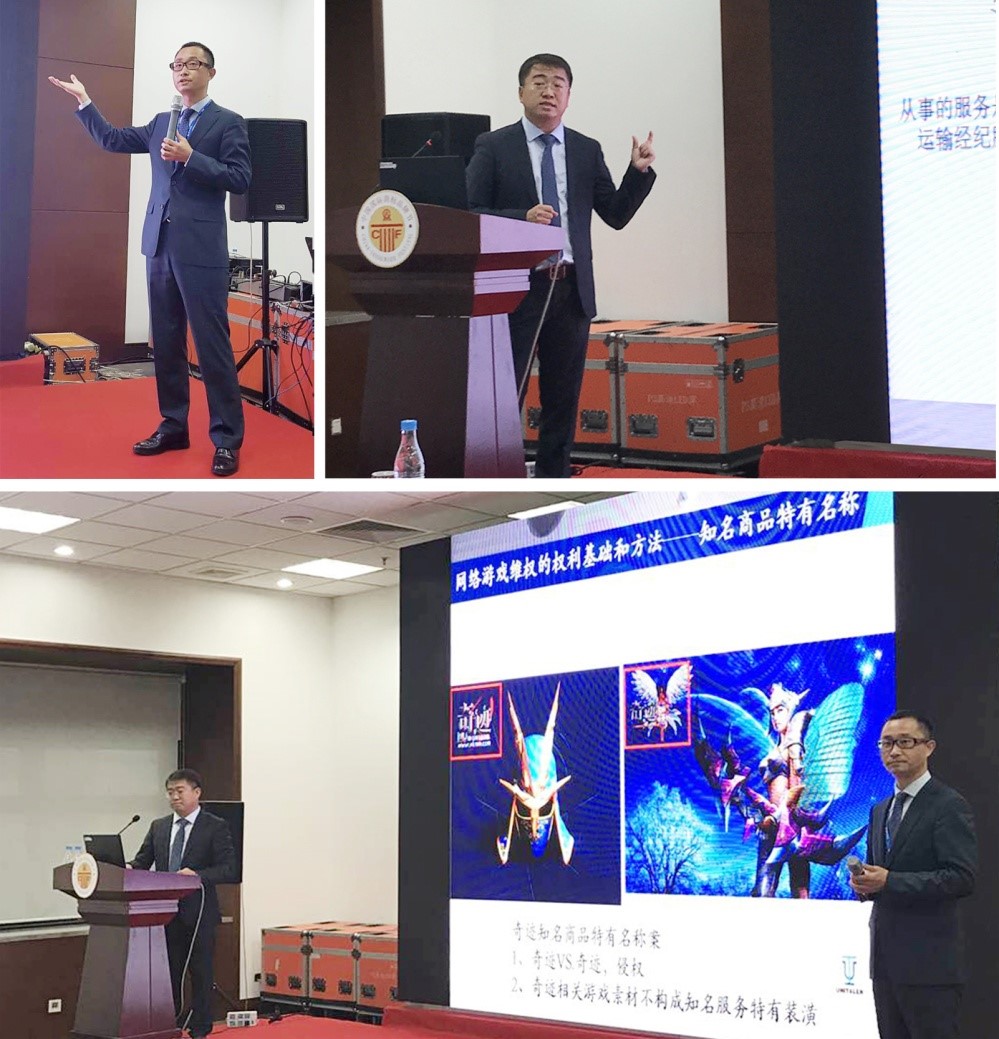
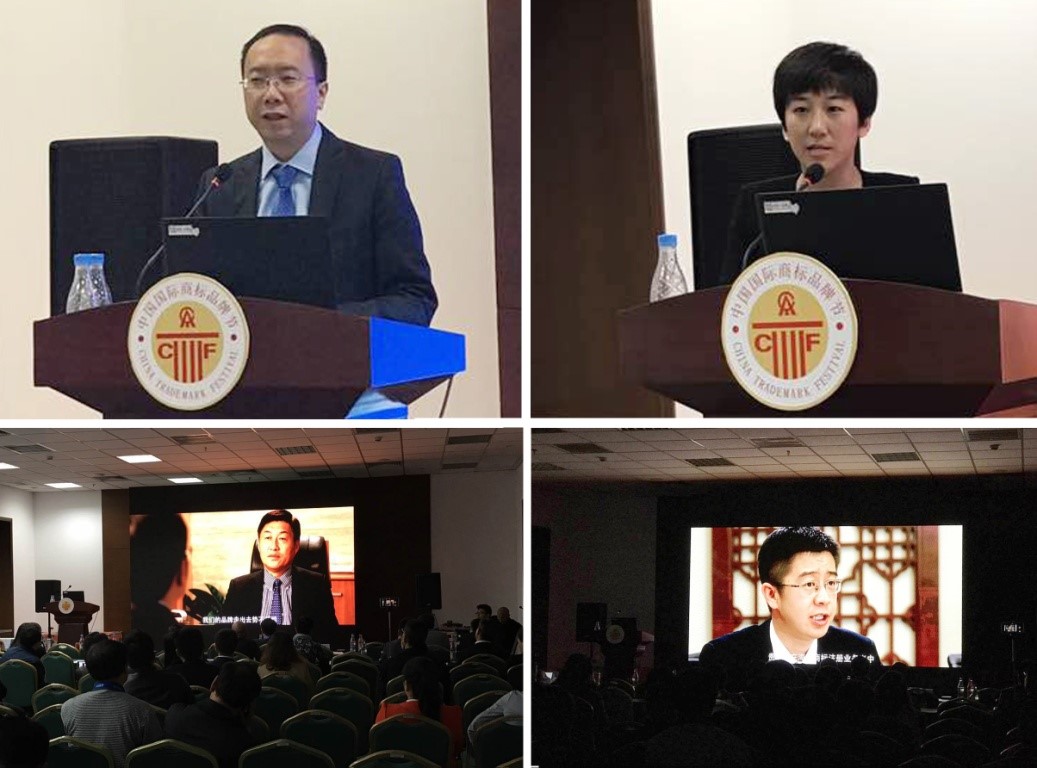
| On October 28, Unitalen Salon was held in International Convention and Exhibition Center of Kunshan during the 2016 Trademark Festival. Mr. Ze Wang, Deputy Secretary General of China Trademark Association, and more than 100 trademark professionals from law firms and businesses attended the event. Unitalen partners Yazhou Zhang, Lei Zhao, Wei Wei and Yanxia Du presented two topics, “Trademark Protection for Names of Apps, Online Games and Video Programs”, and “Pathways for China Trademark Exportation”, and shared their trademark experiences with audience.
|
|
|
| |
| |
| Unitalen Occupational Training Center Expansion Project Completed |
|
| |
| |
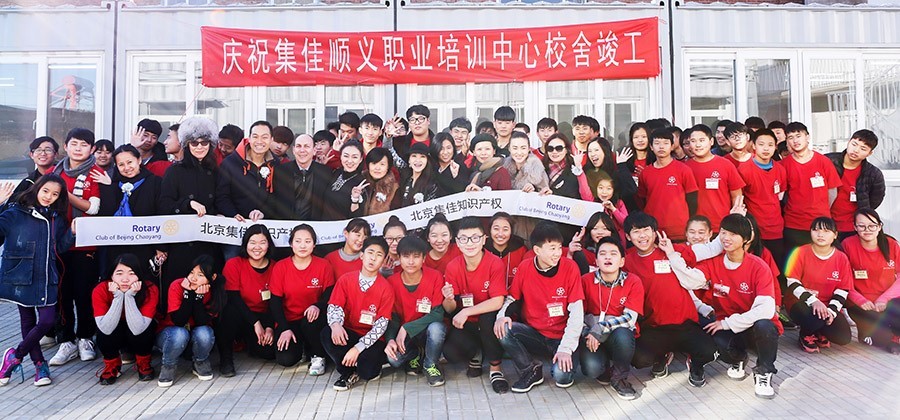
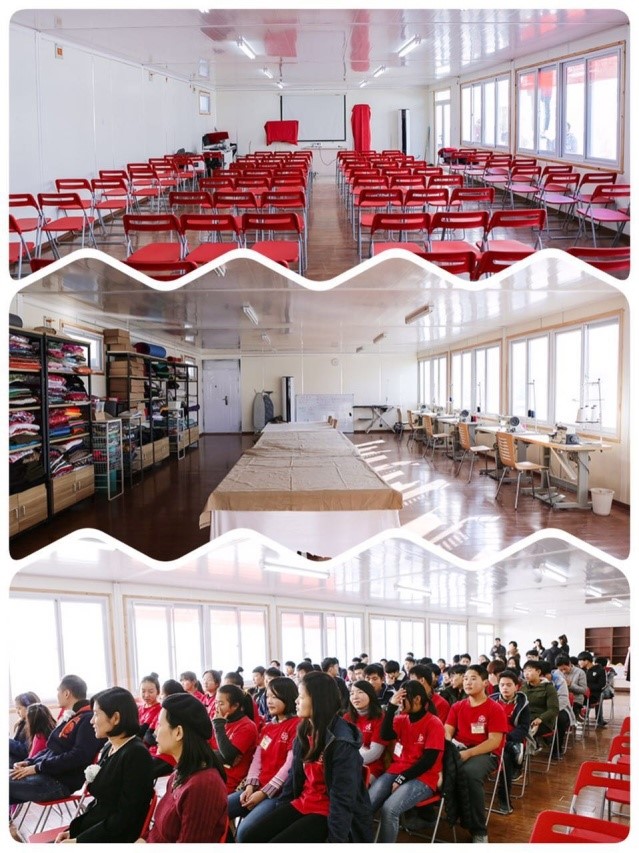
With the 500,000-yuan donation by Unitalen, Unitalen Shunyi Vocational Training Center buildings were completed with expansion and put into use on November 27, 2016.
“Love and Hope Vocational Training School” was established in 2006, which has been focusing on providing vocational training for poor and migrant children. With the growing number of students and the diversification of social career development, the school's old teaching facilities and limited resources were unable to meet the basic teaching needs for all students. After learning the difficulties of the school, Unitalen donated 500,000 RMB yuan to the school immediately through Soong Ching Ling Foundation and Beijing Chaoyang Rotary Club for use in the expansion and improvement of school buildings. In a year’s time, the new building was completed and the school renamed itself “Unitalen Shunyi Vocational Training Center” to recognize the help rendered by Unitalen.
|
|
|
| |
|
| |
|
|
|
|